
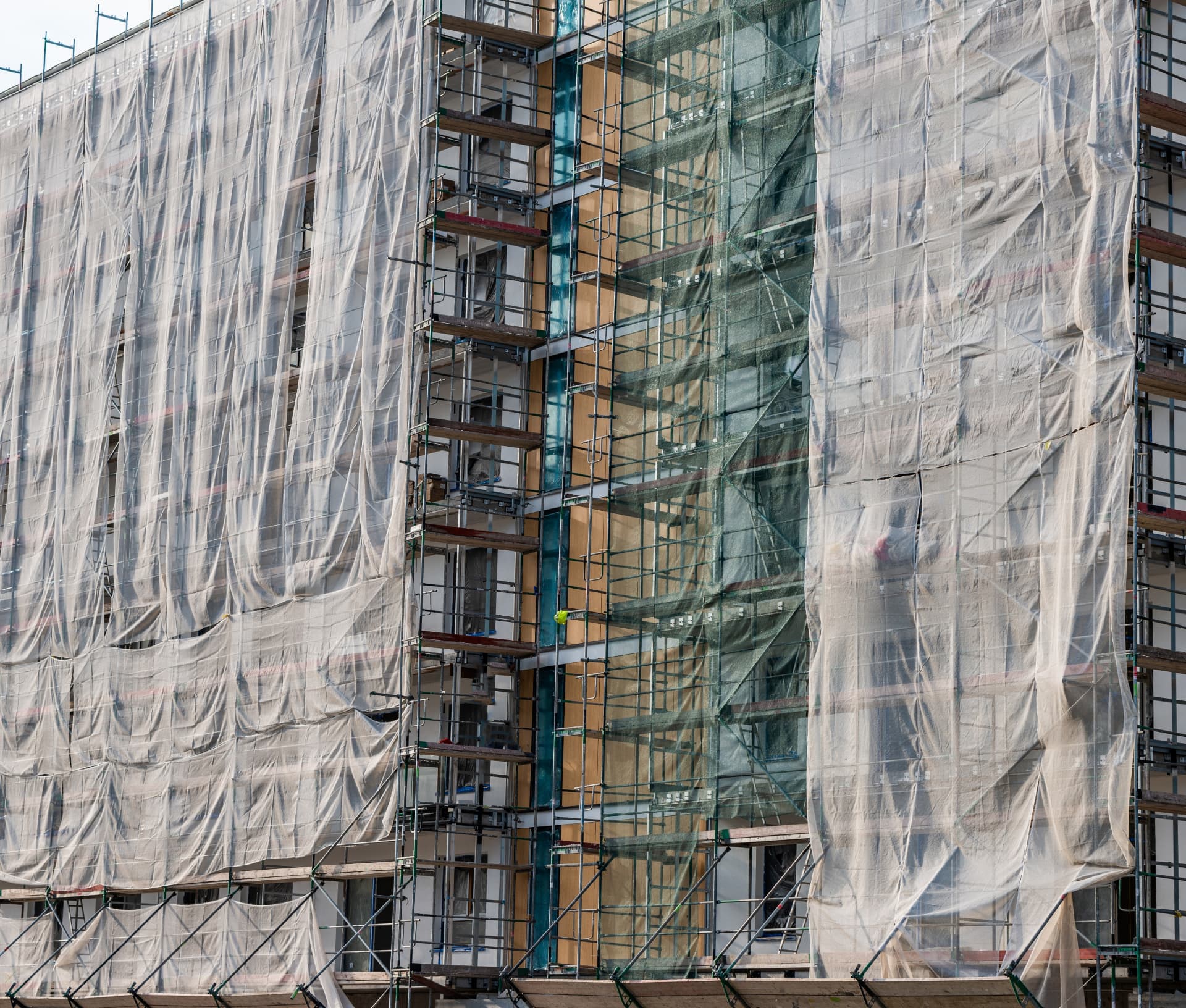
Turnkey structural repairs & restoration
Restoration is a decision about the next twenty years, not the next monsoon.
By the time concrete is spalling, the question is no longer cosmetic. It is how much structural life is left, what is causing the loss, and what stops it for good.
What clients tell us first
The concerns behind the enquiry.
“We keep repairing and the same patches come back.”
Patching treats the symptom. If chlorides or carbonation have reached the reinforcement, corrosion continues quietly behind a fresh plaster face and reappears in a year or two. Diagnosis first is what breaks that cycle.
“The building is fully occupied.”
Most of ours are. Restoration on a live asset is as much about phasing, access, noise, dust and communication with occupants as it is about mortar — and we plan it that way from the start.
“We need to know what this will actually cost, not a rate.”
Fair. On restoration, quantities discovered after opening up are what wreck budgets. We survey, test and quantify before committing, and tell you plainly where the range is and what would move it.
Where it really goes wrong
What actually causes the failure.
01
No diagnosis
Cover, carbonation depth, chloride content and reinforcement condition determine the correct repair. Without them, work is guesswork in fresh mortar.
02
Corrosion left active
New material over corroding steel simply hides the process. The bond fails and the patch spalls again.
03
Water source never removed
Most concrete distress is a water problem wearing a structural costume. Repair without fixing the waterproofing is a maintenance subscription.
04
Cosmetics before sequence
Coating a façade before repairs, joints and waterproofing are resolved buys appearance for a season and hides the evidence.
How we approach it
What we do differently, and why it matters to you.
We investigate before we quantify
Condition survey, testing and mapping of distress across the asset, so scope and cost are based on the building rather than on assumption.
Cluster-wide scope, one standard
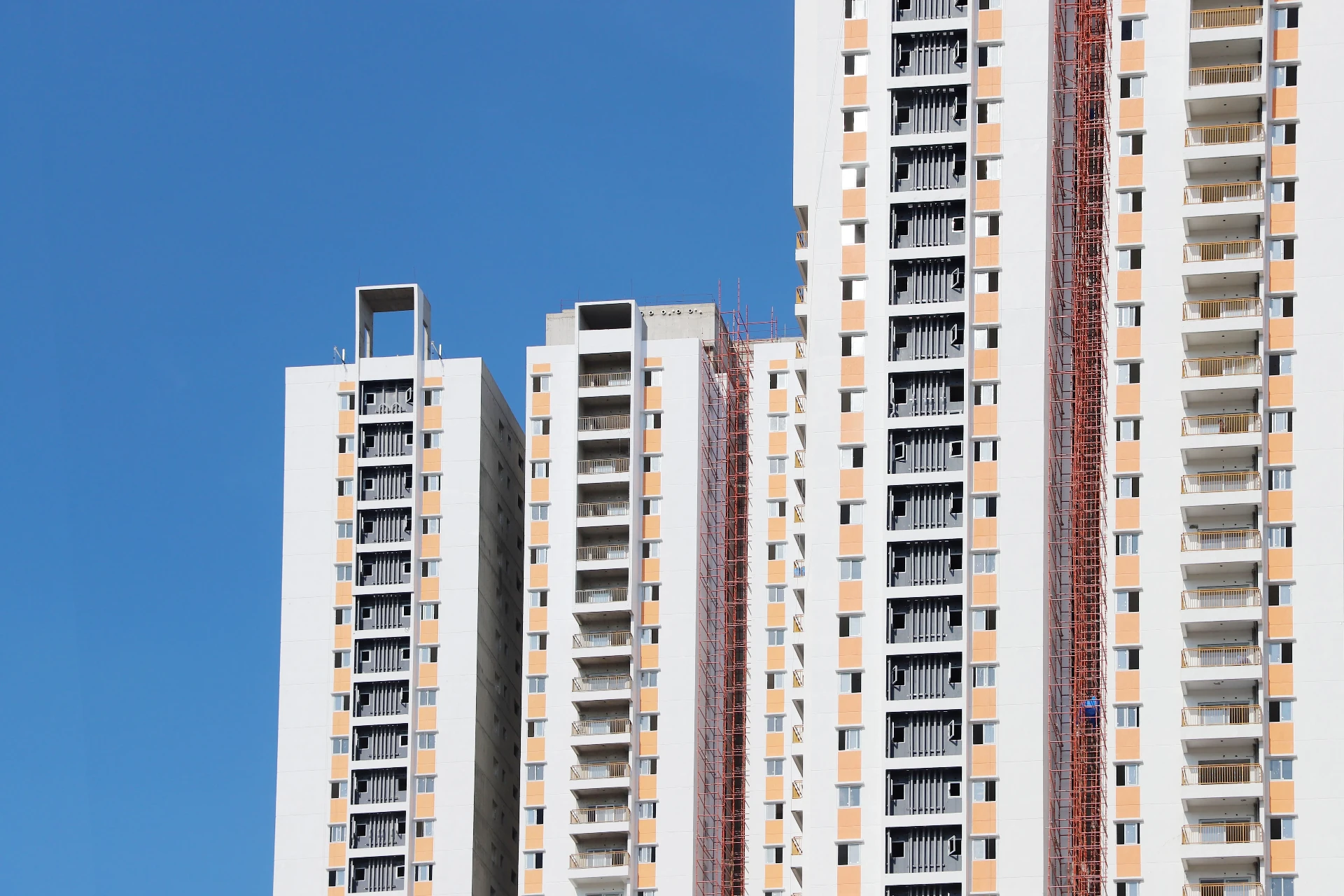
Where an entire cluster is being restored, we work to one engineered specification and one standard of execution across every block — so quality does not vary building to building.
Structure, then water, then finish
Reinforcement treatment and concrete repair, then waterproofing and joints, then protective and anti-carbonation coatings. In that order, the finish actually lasts.
Planned around people
Phasing, access, safety, noise and dust control agreed with your management team, with clear communication to occupants throughout.
Scope & systems
What this scope covers.
Major building and cluster-wide restoration demands more than isolated patchwork. Where reinforcement is corroding or concrete is spalling, structural repair becomes an engineered turnkey scope.
Systems we use
- Concrete repair and structural strengthening
- Corrosion treatment and anti-carbonation coatings
- Crack routing, sealing and injection
- External façade and terrace refurbishment
Typically specified for
- Entire building clusters and large assets
- Major occupied-building rehabilitation
- Comprehensive structural strengthening
- Building-envelope restoration programmes
What you get
What actually reaches you at the end of it.
- A condition survey and test results before scope is fixed
- One engineered specification across the entire building or cluster
- Corrosion treatment addressed, not covered over
- The water source removed as part of the repair, not after it
- A phasing and communication plan for occupied buildings
- A documented record of what was found and what was done, asset by asset
Questions
What clients ask us about this scope.
Visible cracks, spalling, dampness or damaged finishes do not always reveal the true cause of deterioration.
The problem may be cosmetic, caused by water ingress, linked to reinforcement corrosion, or related to deeper structural distress.
The correct repair strategy should therefore begin with identifying the actual cause of damage, rather than treating only what is visible on the surface.
Repairs often fail when only the damaged surface is patched while the underlying cause remains active.
Common reasons include untreated reinforcement corrosion, inadequate removal of unsound concrete, continued water ingress, poor surface preparation, incompatible repair materials or weak bonding with the parent concrete.
A durable repair must address both the visible damage and the mechanism causing it.
The damaged concrete should first be removed sufficiently to expose the affected reinforcement and determine its actual condition.
Corrosion products are then removed, the reinforcement is assessed, and suitable protective or replacement measures are carried out before the repair material is reinstated.
Simply covering corroded reinforcement with fresh mortar can allow deterioration to continue beneath the repaired surface.
In many cases, yes.
The work can often be planned in controlled phases with defined access, barricading, debris management, dust control and sequencing so that unaffected areas remain operational.
For residential, commercial and institutional properties, the repair plan should consider occupant safety and continuity of operations along with technical execution.
Whenever water ingress is contributing to deterioration, waterproofing should be addressed as part of the repair strategy.
Repairing damaged concrete without stopping the source of water can allow corrosion and deterioration to return.
For terraces, podiums, façades, basements and other exposed areas, structural repair and waterproofing often need to be planned together so that the repaired structure is also protected from the conditions that caused the original damage.
The repair should be verified through stage-wise inspection rather than judged only by the final appearance.
This can include checks on removal of unsound concrete, reinforcement treatment, substrate preparation, repair material application, curing, finishing and closure of identified defects.
Where required, records such as photographs, inspection reports, material documentation and test results can support final handover.
The objective is to provide confidence that the root cause has been addressed and the repair has been executed correctly, not merely that the surface looks restored.
Related
Other scopes on the same building
Insights
Related Articles

Next step
Tell us what is worrying you about this scope.
Send us the drawings or the specification you have been handed. We will tell you where we agree, where we would do it differently, and exactly what a lower quotation has left out.