
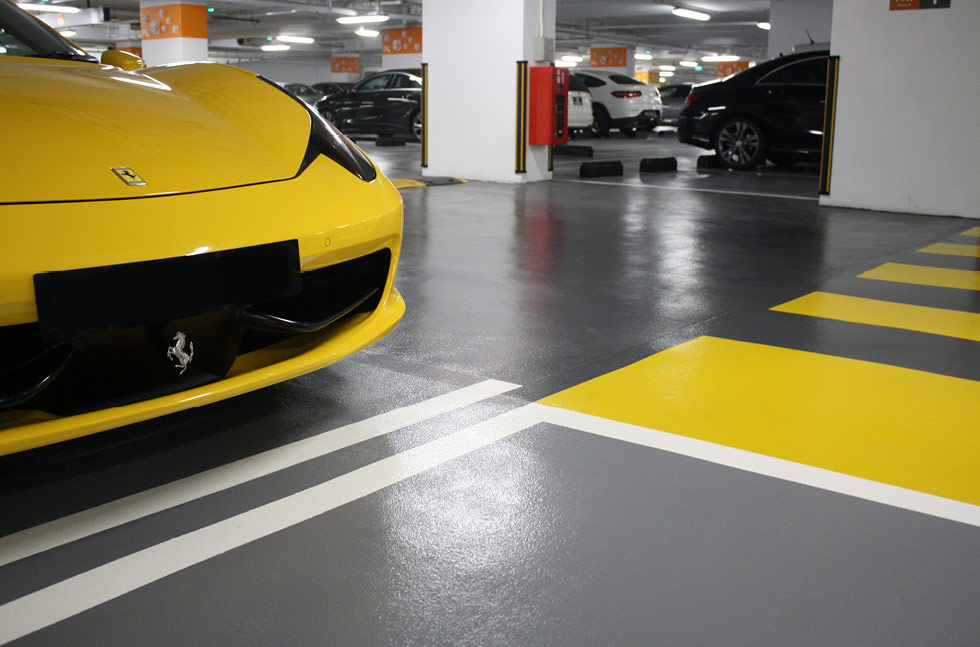
Car park flooring
Built for ten years of traffic. Not for the handover photo.
Treat a car park floor as decoration and it peels. It is an engineered wearing surface — abrasion, impact, oil, thermal movement and thousands of wheel passes a day. PU or epoxy is decided by exposure, traffic and load, and it is decided before we quote.
Before & after
Same deck. Very different outcome.
Left alone, a car park floor dusts, stains and drinks in every oil drop — until nothing bonds to it and the only fix is a far more expensive one. Drag the handle to see what the same space looks like when the surface is engineered instead of left to traffic.
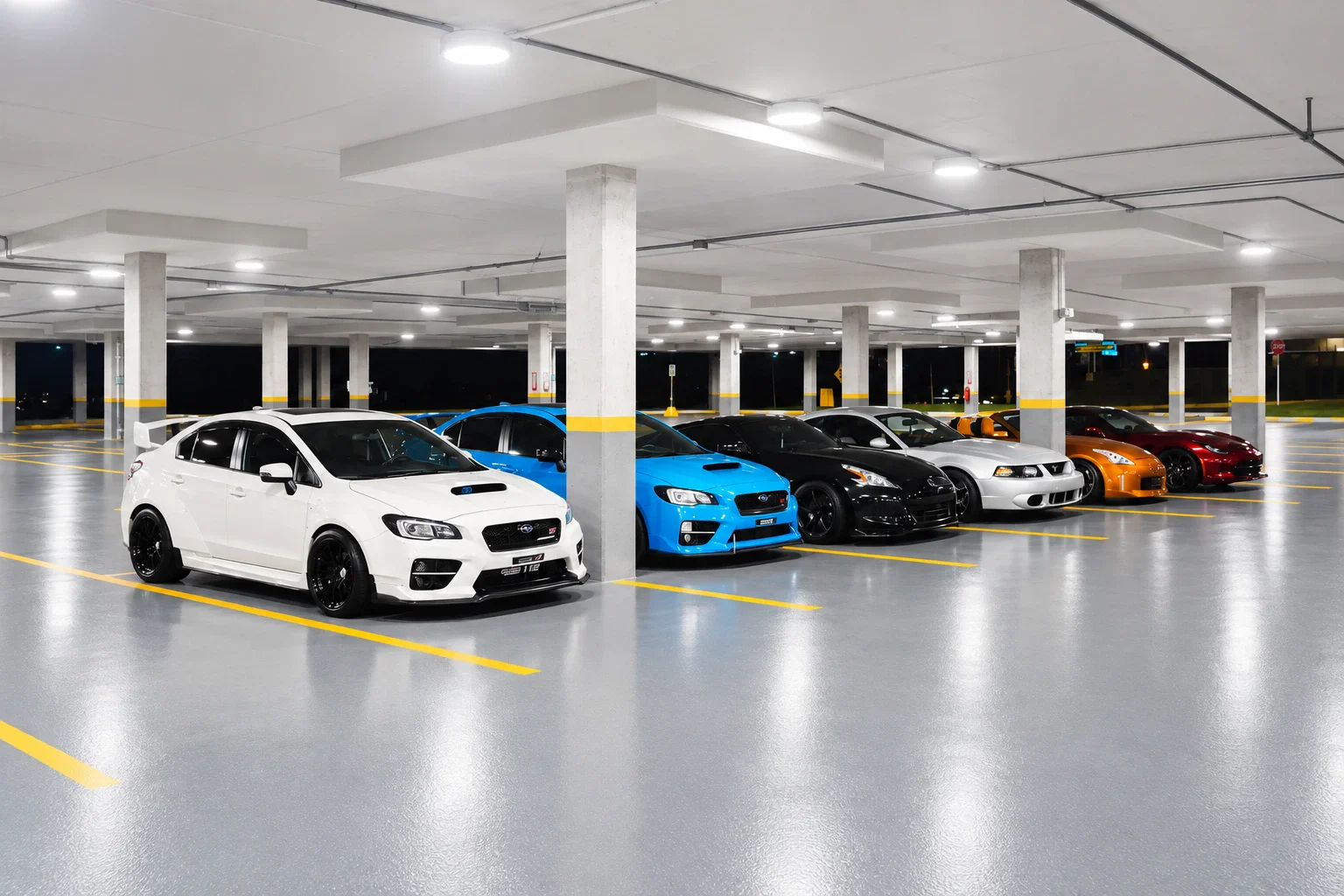
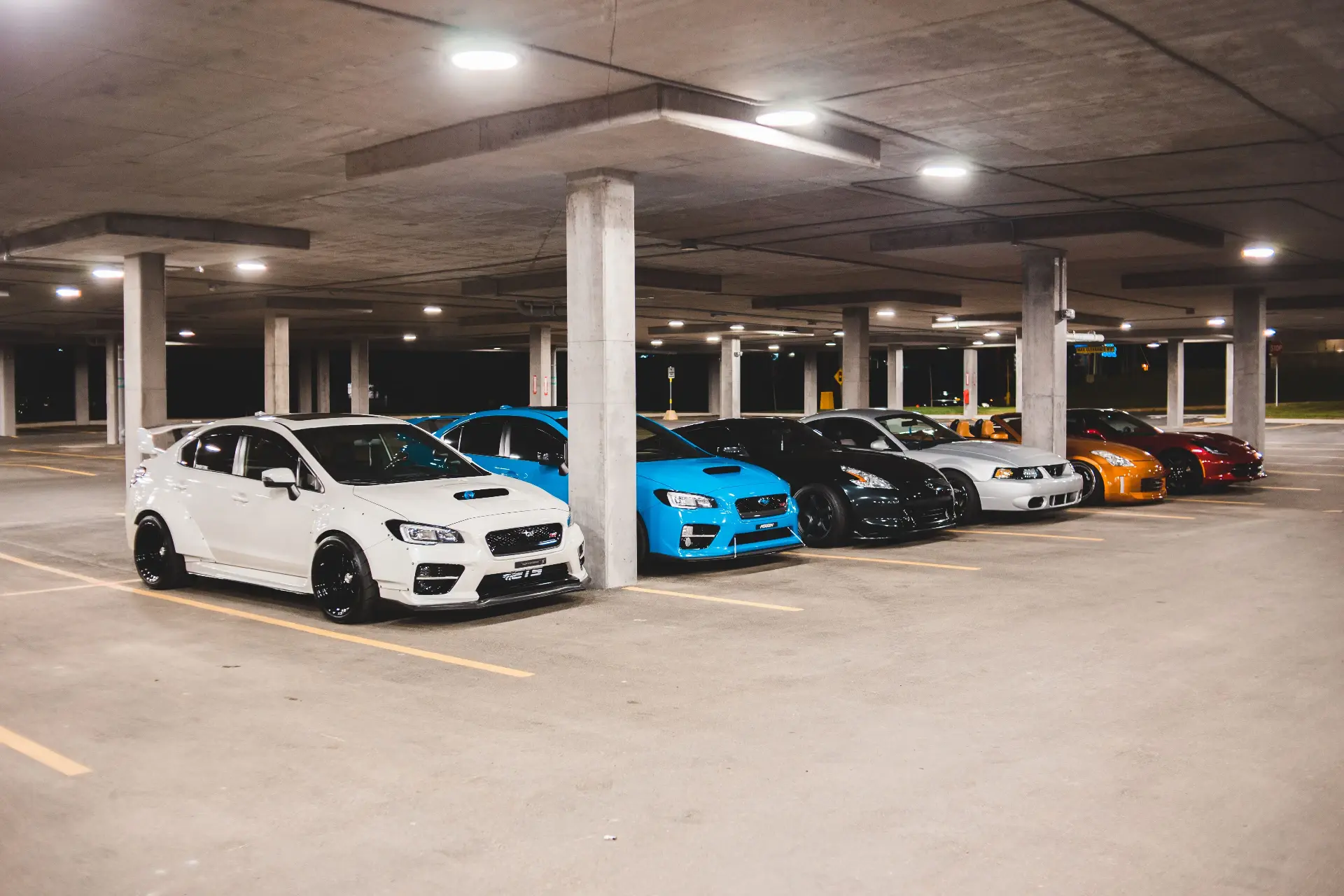
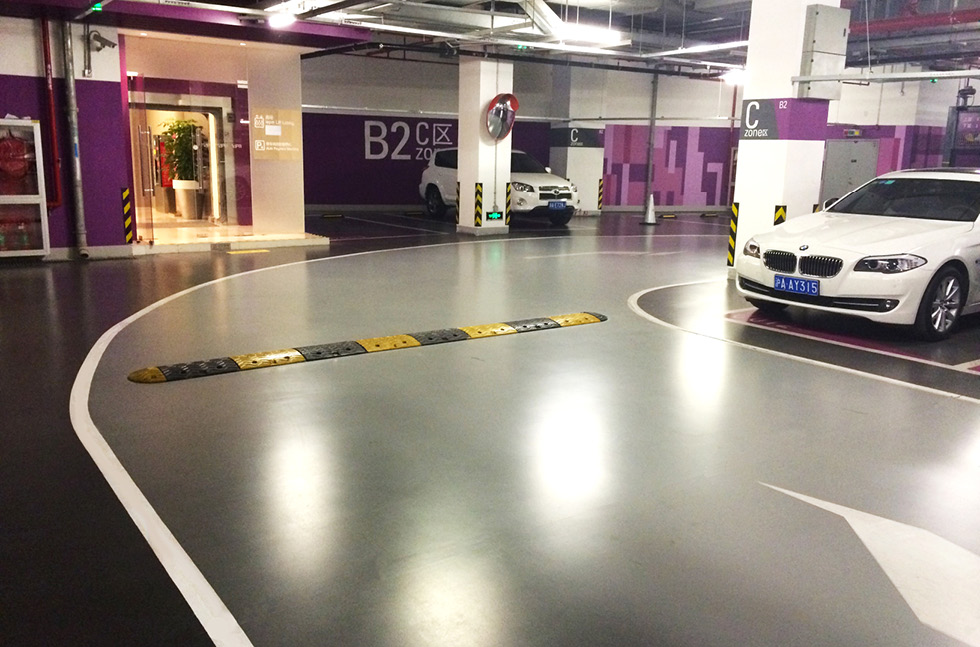
Bare concrete deck → PU deck coating with bay marking and column protection
The decision
PU or epoxy is decided by the deck. Not by the salesman.
Anyone quoting one of the two before seeing whether the deck is exposed to sunlight is guessing on your behalf.
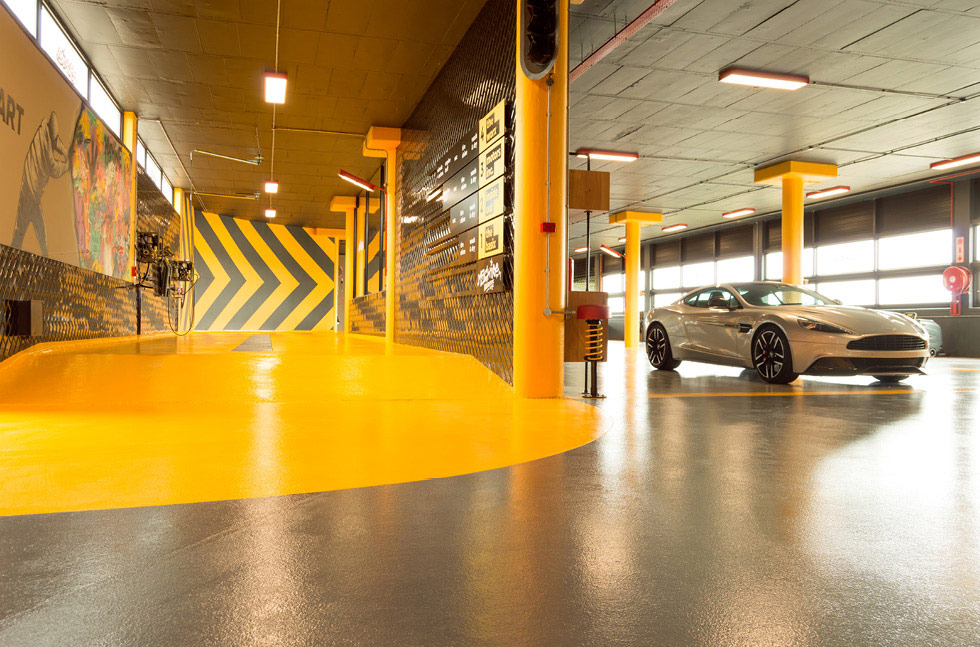
Polyurethane (PU)
Where it belongs
Exposed podium decks, top-deck parking, ramps in daylight, decks over habitable space
Why
Flexible and UV-stable. Accommodates thermal movement and can bridge fine cracks, so it keeps performing on a deck that moves and bakes.
Epoxy
Where it belongs
Enclosed basement parking, service areas, plant rooms, heavy-wheel-load zones
Why
Hard, abrasion-resistant and cost-effective where there is no UV exposure. Chalks and embrittles in sunlight, so it belongs below ground.
Execution
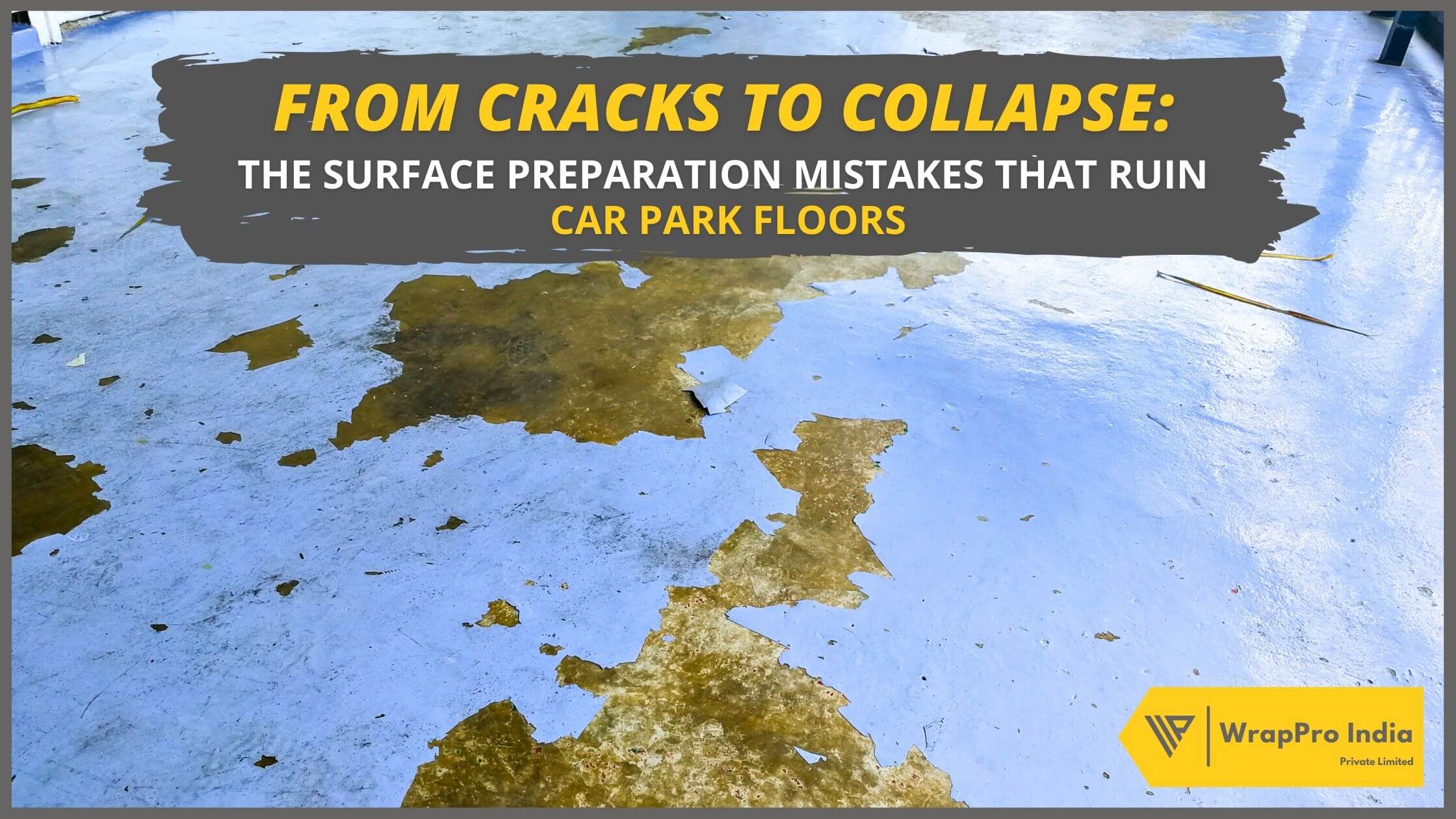
Floors don't fail at the coating. They fail at the preparation.
Six stages decide whether a floor lasts a decade or lifts in the second monsoon.
01
Test before quoting
Substrate moisture, existing coating adhesion, oil contamination and pull-off strength. Almost every peeling floor we are called to was quoted without this.
02
Mechanical preparation
Shot blasting or diamond grinding to remove laitance and open the surface. Acid etching is not preparation; it is a shortcut with a two-year fuse.
03
Repair and fall correction
Spalls, cracks and low spots repaired, and falls corrected to the drains before any coating goes down.
04
Primer matched to the condition
Damp-tolerant, oil-tolerant or standard — chosen from the test results, not from what is on the van.
05
Build coats and anti-skid
Body coats to specified thickness, with aggregate broadcast on ramps and turning circles where grip matters most.
06
Marking, wayfinding, handover
Bay lines, numbering, directional arrows and signage — then a documented handover with cure times the facility team can plan around.
Wayfinding
A car park people can read is a car park people look after.
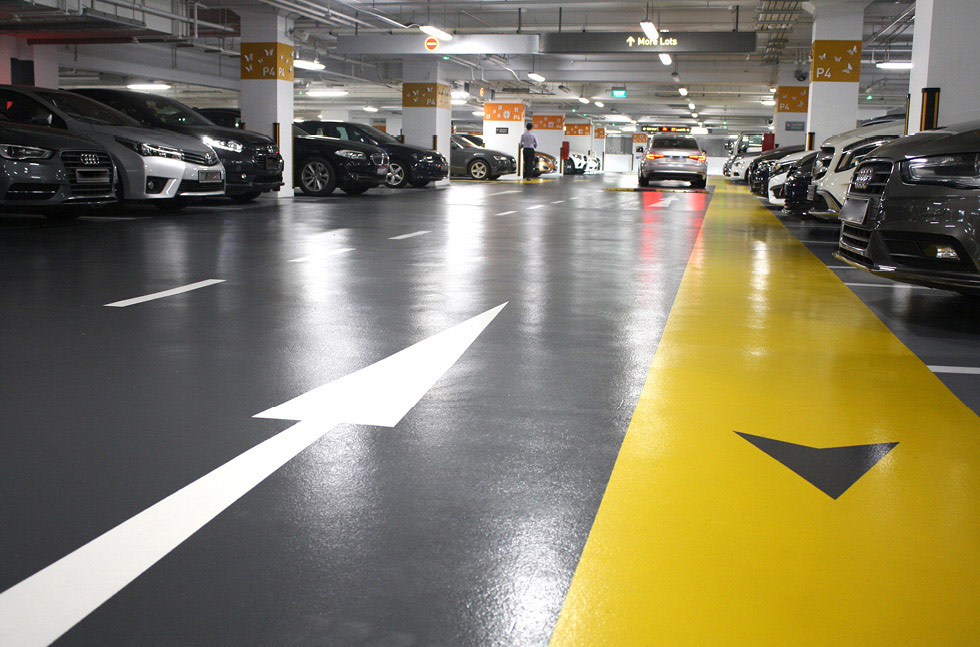
Bay numbering, directional markings, height and zone signage, and colour-coded circulation are part of the same scope. They are also the part residents and visitors actually judge the basement by.
- Bay lines, numbering and reserved marking
- Directional arrows and circulation zoning
- Anti-skid finishes on ramps and turns
- Phased execution on operational car parks
Questions
What clients ask us.
The choice should be based on the way the car park is used.
Epoxy systems are widely used where hardness, abrasion resistance and a clean finish are priorities. Polyurethane systems can offer greater flexibility and can be better suited where movement, impact or more demanding service conditions are expected.
In many projects, the most effective specification is not about choosing one material for the entire car park, but selecting the appropriate build-up for each zone.
Not always.
Ramps, turning areas and driveways experience much higher tyre friction, braking forces and abrasion than parking bays.
These zones may require a heavier-duty build-up, greater texture or additional aggregate to withstand the higher mechanical stress.
A zoned specification can improve durability without unnecessarily over-specifying lower-stress areas.
Delamination is often linked to poor bonding with the concrete rather than to the visible topcoat itself.
Typical causes include inadequate surface preparation, weak concrete, dust or oil contamination, trapped moisture, unsuitable existing coatings or application over a substrate that has not been properly assessed.
A durable coating therefore begins with the condition of the floor beneath it.
The texture should match the area of use.
Ramps and vehicular zones generally need greater slip resistance, while parking bays and pedestrian areas can often use a smoother finish.
Too little texture can compromise safety; too much can make cleaning difficult and increase dirt retention.
The objective is to balance safety, durability and maintainability.
Downtime depends on the system, area condition and curing requirements.
In occupied buildings, the work can often be planned in phases so that sections of the car park remain operational while other zones are being prepared and coated.
Good phasing and traffic management are often as important as the coating itself when working in residential, commercial or institutional properties.
Sometimes.
If the existing coating is well bonded and the substrate is sound, rehabilitation may be possible with local repairs, mechanical preparation and a compatible new coating system.
Where there is widespread delamination, contamination or substrate weakness, more extensive removal may be necessary.
The existing floor should therefore be assessed before deciding whether to repair, overlay or replace.
Look beyond the final price.
Compare the proposed system thickness, surface preparation, treatment of cracks and joints, coating build-up, aggregate content, traffic-zone design, slip resistance, material consumption, application methodology and warranty conditions.
Two systems described simply as “PU flooring” or “epoxy flooring” may differ substantially in actual performance.
Cracks and joints should not simply be coated over without understanding their behaviour.
Static cracks, moving cracks and structural or construction joints may require different treatments. If movement is expected, the detailing needs to accommodate it rather than relying on the floor coating alone.
Ignoring these areas can lead to reflective cracking and premature failure of the finished surface.
Related
Where to go next
Insights
Related Articles
Technical guidance on car park coatings, deck preparation, PU, epoxy and long-term floor performance.

Next step
Send us a photo of the floor. We will tell you what it needs.
A few images of the deck, the ramps and any existing coating usually tell us whether you need a recoat, a full renewal, or a preparation problem solved properly.