
Assurance Waterproofing
Stop hoping the roof is sound. Test it.
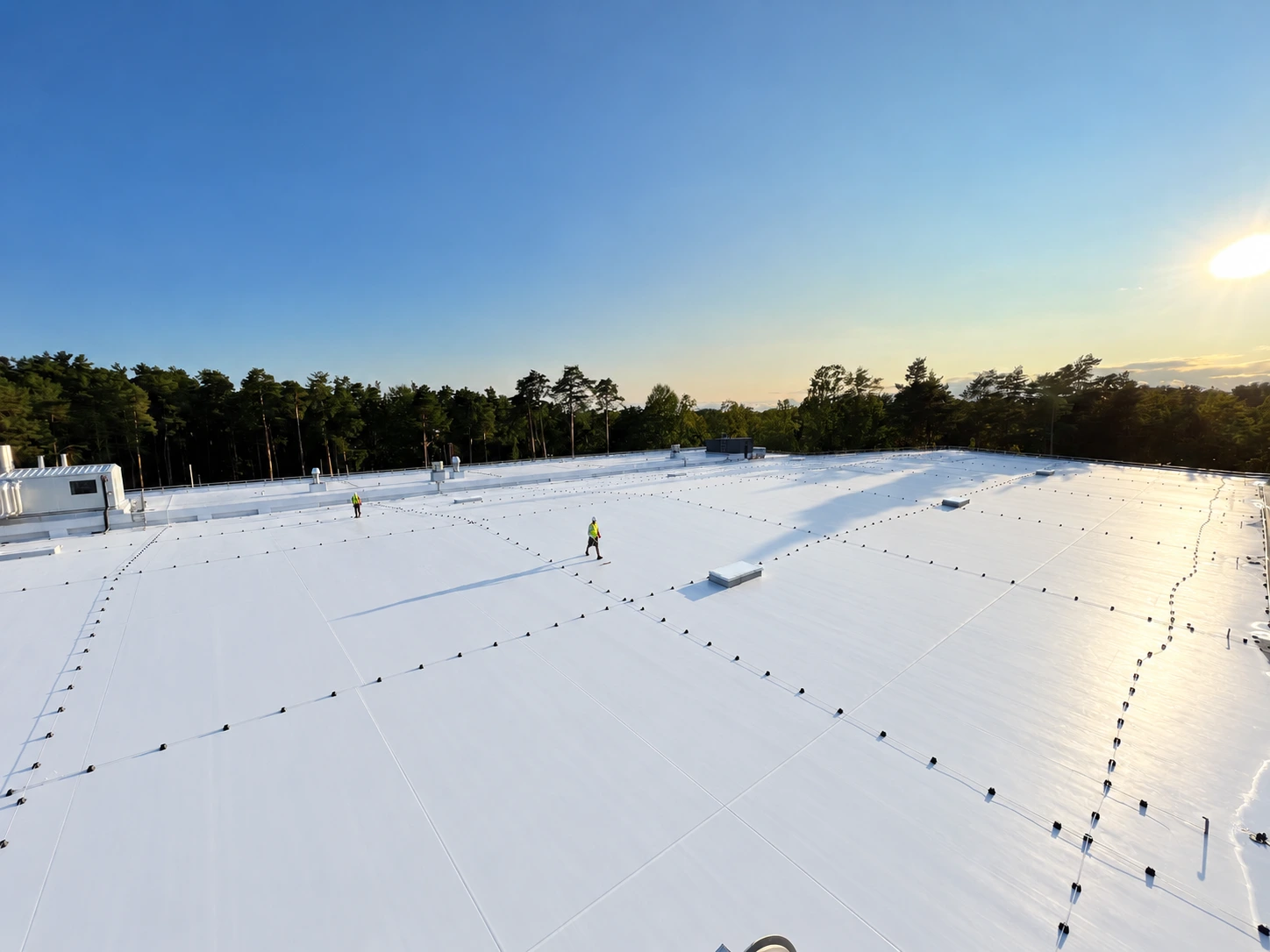
A patented European roofing technology, brought to India by WrapPro: the waterproofing is installed as an exposed, accessible membrane — so its integrity can be scientifically verified at handover, and re-verified at any point in the building's life.
THE PROBLEM
Roofs in India are traditionally accepted on a 48-hour flood test.
That test tells you almost nothing you can act on. It tells you that water came through somewhere, after 48 hours, only if the breach sits above the water line, and only while the roof is still empty. On a finished roof above occupied space, that is not a test — it is a hope.
CONVENTIONAL FLOOD TEST
- Confirms a leak exists — not where it is
- Takes two days and tonnes of standing water
- Misses breaches above the water line
- Cannot be repeated once finishes are laid
- Loads a structure that may not want the load
ASSURANCE WATERPROOFING
- Locates each breach precisely, anywhere on the roof
- Completed in hours, with no standing water
- Covers the whole membrane, not just low points
- Re-testable, as the membrane stays accessible
- Produces a dated record of roof condition
HOW IT WORKS
Five stages. One verifiable roof.
01
The roof is prepared to stay accessible
The roof build-up is prepared so that the waterproofing is never permanently buried — no screed or tiles locking it away. Where a finished terrace is needed, removable pavers on pedestal supports sit above it instead.
02
An exposed TPO membrane is installed
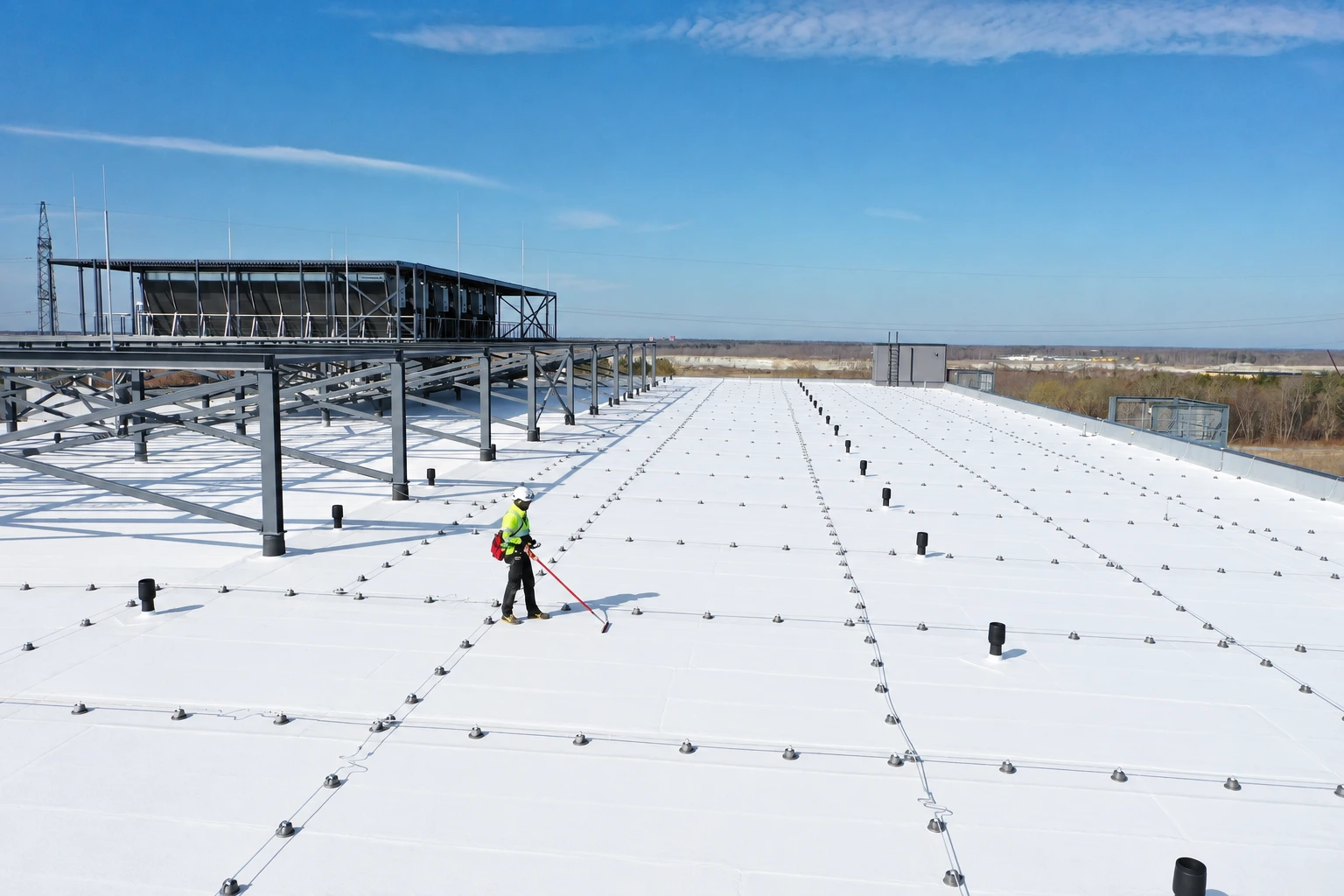
A durable TPO membrane — engineered for long-term UV, heat and weather exposure — is installed as the final waterproofing layer, and remains visible, inspectable and repairable throughout its life.
03
A precision test locates any breach
Our technicians check the installed membrane scientifically and pinpoint even very small punctures accurately — without flooding the roof or breaking anything open.
04
It is repaired, then re-tested
Because the membrane stays accessible, the defect is repaired locally — no breaking screeds or tiles to hunt for the source — and the roof is tested again, so handover reflects a roof that has actually passed.
05
It can be tested again, any time
After maintenance work, new rooftop equipment, accidental damage, or years into the building's life — the membrane's integrity can be verified again whenever there is a concern.
WHERE IT PAYS
Anywhere finding a leak is more expensive than preventing one.
- Roofs above data centres, hospitals and laboratories
- Hotels and premium residences where disruption is unacceptable
- Finished terraces using removable pavers on pedestal supports
- Existing leaking roofs suitable for rehabilitation without full demolition
- Any terrace above occupied space, where investigation means demolition
QUESTIONS
What clients ask before specifying it.
Conventional waterproofing is usually concealed beneath screed, tiles or other protective layers. Once covered, the membrane becomes difficult to inspect and its actual condition cannot easily be verified.
Assurance Waterproofing takes a different approach. A durable TPO waterproofing membrane remains the final exposed waterproofing layer, keeping the system accessible throughout its service life.
More importantly, its integrity can be scientifically tested so that even very small punctures or breaches can be identified and accurately located.
The objective is to move from assuming the roof is waterproof to being able to verify it.
Yes. Exposed single-ply membranes such as TPO are a well-established roofing practice internationally, particularly on large commercial, industrial and institutional roofs.
TPO membranes are specifically engineered for long-term outdoor exposure, including resistance to UV radiation, heat and weathering.
Keeping the waterproofing exposed also provides an important lifecycle advantage: the membrane remains visible, accessible, inspectable and repairable instead of being permanently buried beneath other construction layers.
Roof access can be planned rather than allowing uncontrolled movement directly over the membrane.
Dedicated walkways or traffic paths can be provided between roof access points, services, equipment and areas requiring regular maintenance. These provide safer walking surfaces while protecting the waterproofing from repeated foot traffic.
The roof therefore remains accessible for maintenance without turning the waterproofing membrane itself into the primary walking surface.
The advantages of Assurance Waterproofing do not necessarily require the terrace to look like an exposed membrane roof.
Where the project requires a finished terrace, removable pavers on pedestal supports can be considered above the waterproofing membrane.
This provides a conventional finished walking surface while avoiding permanently burying the waterproofing beneath screed and tiles. The pavers can be lifted when access is required, allowing the waterproofing below to remain inspectable, testable and locally repairable.
This can provide an effective middle ground between architectural usability and long-term waterproofing accessibility.
A ponding test confirms the condition of the waterproofing only at the time the test is performed.
In conventional construction, ponding is generally carried out before the waterproofing is covered. The membrane can subsequently be punctured or damaged by other trades, service installations or construction activities before the protective layers are completed.
That damage may remain hidden until leakage appears much later.
Assurance Waterproofing addresses this limitation by providing the ability to scientifically verify membrane integrity when required, rather than relying solely on a one-time test.
The membrane can be scientifically checked to identify even very small breaches and accurately locate the affected area.
Because the waterproofing remains accessible, the defect can then be repaired locally.
This avoids the conventional process of breaking screeds, tiles or large areas of the roof merely to search for the source of leakage.
For the building owner, this means faster diagnosis, targeted repairs and significantly less disruption.
Yes, this is one of the key advantages of Assurance Waterproofing. If there is a concern after maintenance work, installation of new rooftop equipment, accidental damage or at a later stage of the building's life, the membrane integrity can be checked again.
The roof therefore becomes a waterproofing asset that can be inspected, verified and maintained over time, rather than a concealed system whose condition remains unknown until leakage occurs.
In suitable situations, yes.
An existing roof can first be assessed to determine whether its current build-up provides a suitable base for rehabilitation. Where technically appropriate, an exposed TPO waterproofing system may be installed over the existing roof without completely dismantling all existing layers.
This can substantially reduce breaking, debris, construction time and disruption to an operational facility while converting the roof into an accessible and verifiable waterproofing system.
Demonstration
We will test a roof in front of you.
The fastest way to understand Assurance Waterproofing is to watch a breach get located on a sample deck. We do these for design teams and client bodies on request.