
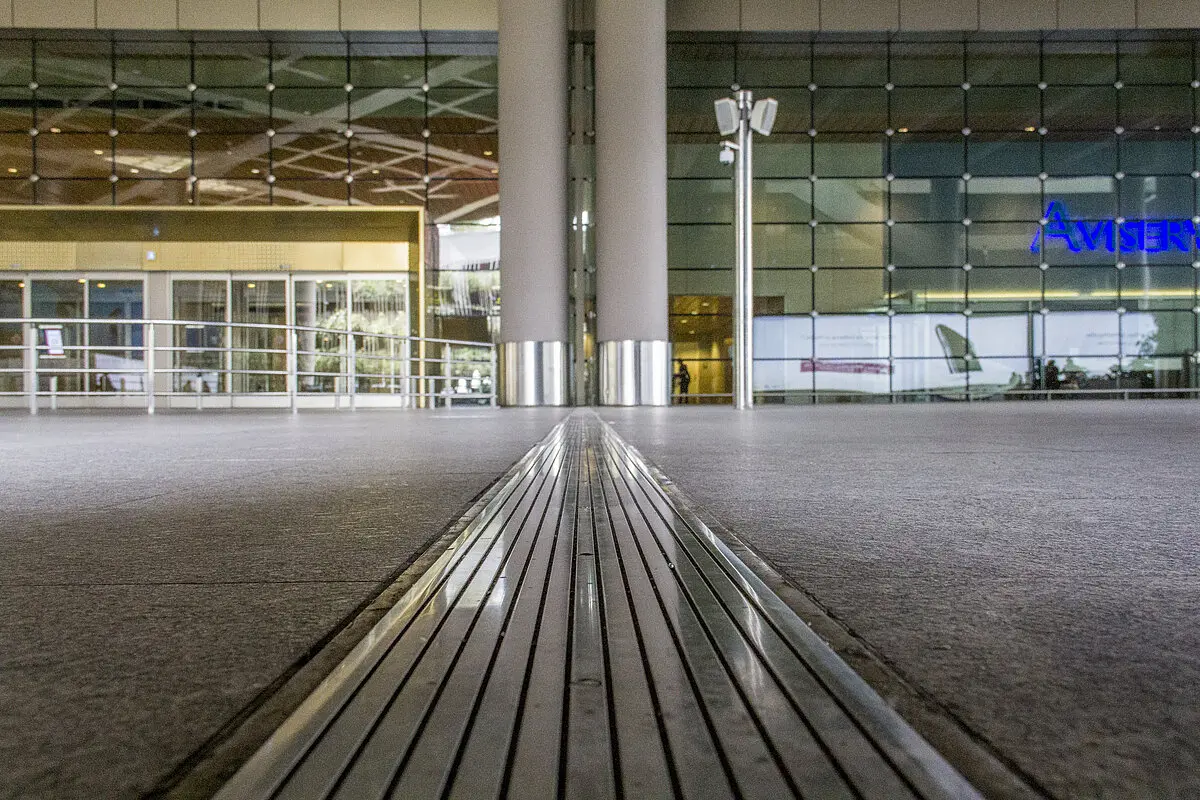
Expansion joint treatment
The joint is where your building is designed to move — and where waterproofing usually gives up.
Every other part of the deck is asked to stay still. The joint is asked to move for the life of the building, and then to stay watertight while doing it.
What clients tell us first
The concerns behind the enquiry.
“We have sealed this joint three times already.”
Then it was almost certainly sealed rather than detailed. A joint that is simply filled and coated has nowhere to put its movement, so it tears at the first thermal cycle. The fix is a system that expects to move.
“The leak appears nowhere near the joint.”
That is typical. Water enters at the joint and travels along the slab or within the build-up before it shows up in a ceiling metres away — which is why joints get blamed last and repaired repeatedly in the wrong place.
“The joint has to look acceptable, not just work.”
Agreed. On podiums, lobbies and terraces people walk across, we choose covers and profiles that sit flush and read as intentional, rather than as a repair strip.
Where it really goes wrong
What actually causes the failure.
01
Sealant used as a movement system
Sealant has a movement capability. Exceed it and the joint splits — usually at the bond face, invisibly.
02
Waterproofing stopped at the joint
When each side's membrane terminates at the joint instead of being carried continuously through the assembly, the joint becomes a designed hole.
03
No drainage behind the joint
Water that gets past the top layer needs a route out. Trapped, it finds the structure instead.
04
Cover plates fixed through the membrane
Anchors drilled through a finished deck create a fresh set of leak paths right where the water is concentrated.
How we approach it
What we do differently, and why it matters to you.
We start from expected movement
Joint width, structural type, thermal range and traffic decide the system. That calculation comes before any product is named.
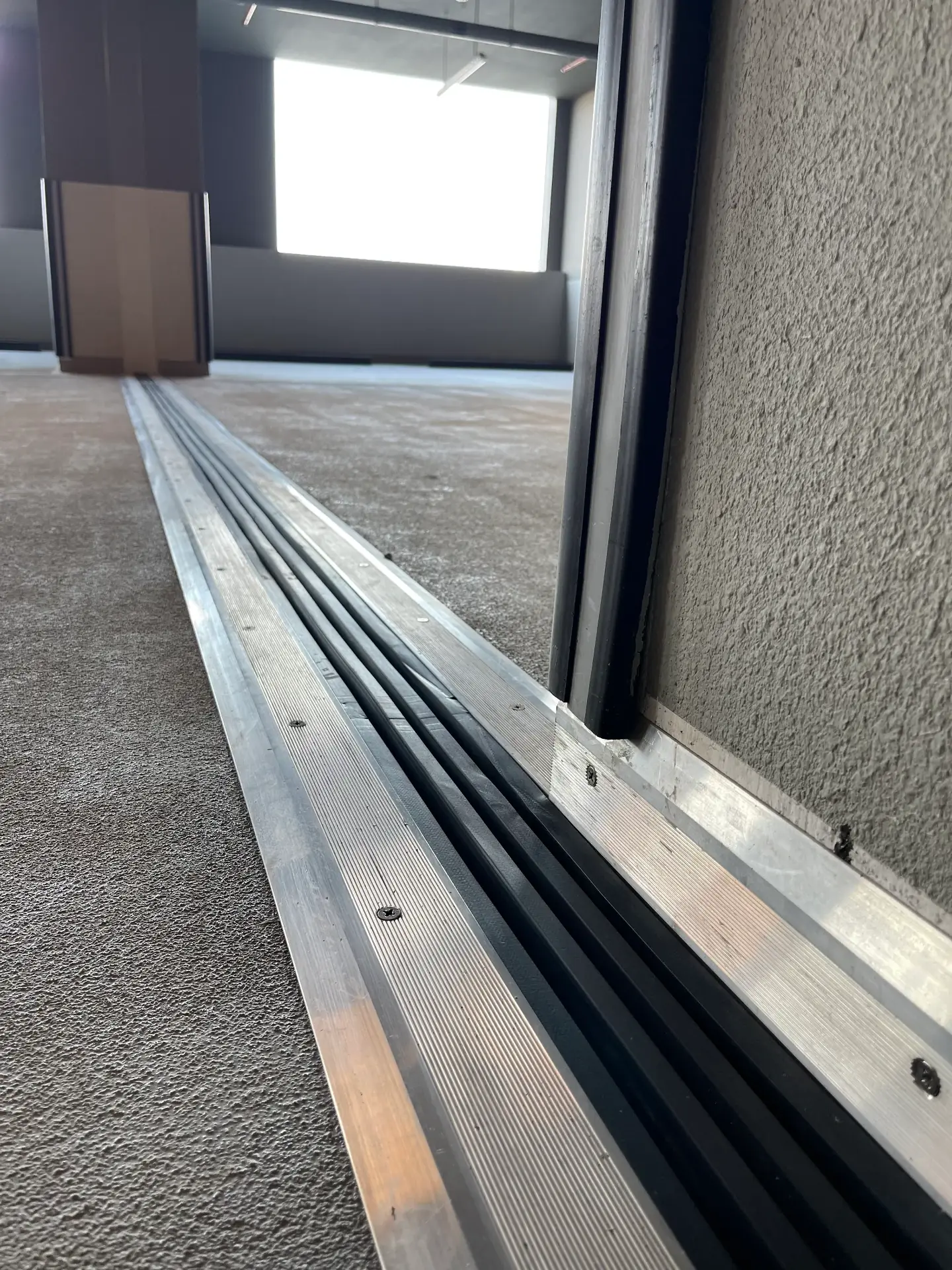
Continuity through the joint
The waterproofing is carried through the joint assembly as one continuous line, with a designed secondary route for any water that gets past the surface.
Detailed at the difficult ends
Joint terminations, upstands, kerbs and changes of direction are drawn and agreed — that is where retrofit joints fail again.
Retrofit without repeating history
On a failed joint we open it up, find out how the water actually travelled, and rebuild the assembly rather than adding another layer over the last attempt.
Scope & systems
What this scope covers.
Joints are where buildings are designed to move, and where waterproofing is most often defeated. A joint coated over rather than detailed will reopen at the first thermal cycle.
Systems we use
- Engineered joint sealant and backer systems
- Bandage and strip systems for movement
- Metal cover plate assemblies
- Waterproofing carried continuously through the joint
Typically specified for
- Podium and deck joints
- Structural separation joints
- Joints between towers and podiums
- Retrofit of failed joint treatments
What you get
What actually reaches you at the end of it.
- Movement-based system selection with the reasoning documented
- Drawn joint details agreed before mobilisation
- Continuous waterproofing through the joint assembly
- Trafficable, presentable finishes on exposed decks and lobbies
- Honest diagnosis on repeatedly failed joints
- Records you can hand to whoever maintains the building next
Questions
What clients ask us about this scope.
Recurring leakage usually means the repair has treated the symptom without properly addressing the movement and detailing of the joint.
Expansion joints are designed to move. If the repair material is too rigid, poorly bonded, incorrectly detailed or unsuitable for the actual joint movement, failure can reappear.
A durable solution begins with understanding how the joint moves, where water is entering and why the previous treatment failed.
The appropriate system depends on the joint width, expected movement, substrate condition, location, water exposure, traffic and whether the joint is horizontal, vertical or buried.
A basement joint, terrace joint, podium joint and car park joint may all require different treatment strategies.
The system should therefore be selected around the actual movement and service conditions of the joint, not simply its visible width.
In many cases, yes.
If the surrounding concrete and joint edges are sound, the failed material can often be removed and replaced with a properly designed joint treatment system.
Where there is damaged concrete, incorrect joint geometry, deteriorated edges or failure below the visible surface, localised repair or reconstruction may be necessary.
The extent of intervention should be based on the cause of failure, not on a standard repair approach.
The system may tear, debond, crack or lose its seal even if it was initially installed correctly.
Expansion joints are intended to accommodate movement caused by temperature variation, shrinkage, structural movement or other building behaviour.
The selected treatment must therefore have sufficient movement capability for the actual joint requirement. Otherwise, repeated failure is likely.
Traffic-bearing joints must manage both structural movement and repeated mechanical loads from vehicles.
These locations may require specialised joint systems, reinforced edges, protective profiles or heavy-duty detailing so that the waterproofing component is not damaged by tyres, braking forces, impact or abrasion.
Such joints should be treated as movement and load-bearing interfaces, not simply as sealed gaps.
The joint treatment and the adjoining waterproofing should function as one continuous waterproofing system.
A well-treated joint can still leak if there is a weak transition between the joint system and the surrounding membrane, coating or waterproofing layer.
The interface should therefore be carefully detailed, compatible and inspected so that the joint does not become a vulnerable break in the waterproofing envelope.
Before handover, the joint should be checked for correct preparation, continuity, adhesion, detailing, protection and compatibility with adjoining waterproofing.
The completed treatment should be free from visible defects and installed in a manner that allows it to perform under the expected movement, water exposure and service conditions.
For expansion joints, correct detailing and execution are as important as the material selected.
Related
Other scopes on the same building
Insights
Related Articles

Next step
Tell us what is worrying you about this scope.
Send us the drawings or the specification you have been handed. We will tell you where we agree, where we would do it differently, and exactly what a lower quotation has left out.